Drip vs. Sprinkler Irrigation for Minnesota Clay Soils: What Contractors Serving Rochester, MN, Need to Know
October 13, 2026
Contractors working with Minnesota's heavy clay soils need clear, practical guidance when choosing between drip and sprinkler irrigation. This guide covers exactly that for professionals serving the Rochester, MN, and Alexandria, MN, markets. Whether you are bidding a commercial install near Mayo Clinic's campus in Olmsted County or planning a residential shrub-bed project in Douglas County, the soil beneath your feet shapes every product and scheduling decision you make.
How Minnesota Clay Soil Affects Your Irrigation System Choice
Clay soil changes everything about how you design and spec an irrigation system. Its dense structure means water infiltrates slowly and the soil holds moisture for a long time. On a Rochester, MN, lawn or institutional property, this can translate to surface pooling, runoff across turf, and soggy bed conditions that linger for days after a rain event. In Douglas County near Alexandria, heavier soils in the lakes country corridor tend to hold water longer than contractors from sandier regions might expect.
The core rule with clay is this: slow application wins. Any system that delivers water faster than the soil can absorb it will push runoff off-site rather than into the root zone. That reality directly shapes which system type fits which project. Prioritizing components designed for low application rates when sourcing irrigation supplies in Rochester, MN, will give your clay-soil installs a measurable performance advantage.
Drip Irrigation on Clay: Where It Tends to Perform Well
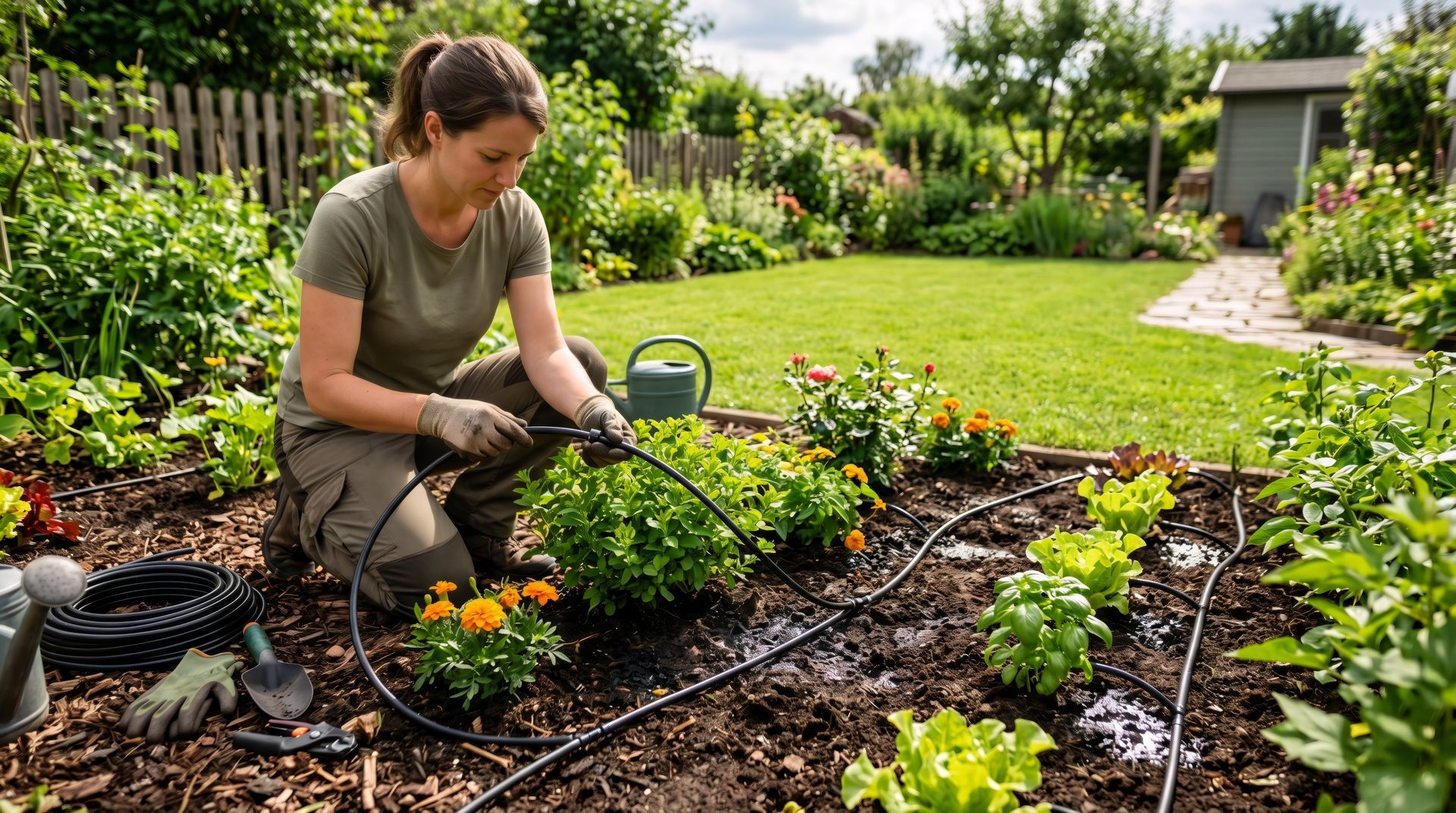
Drip irrigation is often a strong match for clay soil. Water releases slowly and directly at the root zone, giving clay time to absorb moisture before runoff develops. This makes drip a practical choice for shrub beds, perennial borders, and foundation plantings where precise delivery matters and turf coverage is not the goal.
The low application rate pairs well with clay's low infiltration rate, reducing compaction risk and preventing the soggy, oxygen-depleted conditions that stress plant roots. Stocking the right irrigation supplies in Rochester, MN, including pressure-compensating emitters and quality filter assemblies, positions your business to handle these installs efficiently.
Key drip components to spec for clay-soil applications may include pressure-compensating emitters to maintain consistent flow across grade changes, inline drip tubing or soaker line for shrub and perennial rows, filter assemblies and flush-end caps to manage sediment in Minnesota's often hard water, and backflow prevention components appropriate for underground installation.
One consideration: in clay-heavy soils, closer emitter spacing may help ensure moisture reaches adjacent root zones without creating wet pockets that stay saturated between cycles.
Sprinkler Systems on Clay: What Contractors Need to Program Differently
Sprinkler systems remain the right choice for turf-dominant properties, large commercial sites, and areas requiring uniform coverage across open ground. In Olmsted County, institutional campuses, HOA common areas, and hospitality properties along U.S. Highway 52 often call for multi-zone rotary or pop-up head systems. Having access to quality irrigation supplies in Rochester, MN, means you can respond quickly to these larger bids without waiting on out-of-region distributors.
The challenge is programming. Clay cannot absorb water at the rate a sprinkler head delivers it. Running a zone for a long, continuous cycle leads to runoff before deep saturation occurs. The solution is cycle-and-soak scheduling, where each zone runs a short burst, pauses to let water infiltrate, then runs again. For Alexandria-area contractors working on lakeshore properties or newer subdivisions in Douglas County, the same principle applies, though sandier pockets near lake shorelines may behave differently from inland clay-dominant parcels.
Sprinkler components to source for clay-soil projects may include rotary or multi-stream heads that apply water slowly and uniformly, smart controllers with cycle-and-soak functionality, valves and manifolds rated for freeze-thaw stress, and rain sensors to prevent over-application after precipitation events.
Winterization: A Non-Negotiable Step in Both Counties
Minnesota's freeze-thaw cycle does not forgive incomplete winterization. In Rochester, MN, ground temperatures can drop well below freezing by late October, and residual water left in lateral lines, valves, or emitter tubing can crack components and create costly spring repairs. Contractors who keep winterization components on hand, sourced from irrigation supplies in Rochester, MN, are better positioned to complete end-of-season work as scheduling windows tighten in fall.
For sprinkler systems, compressed-air blowout is the standard method for clearing zones before the first freeze. For drip systems, the process is equally important: drain valves, flush emitters, and protect backflow preventers exposed above grade. Smart controllers with seasonal shutdown programs can also reduce the risk of accidental late-season activation after winterization is complete.
What Emitter Spacing Works Best in Clay Soils?
Closer emitter spacing, often 12 inches or less, can help compensate for clay soil's slower lateral water movement. Testing spacing on new install types before committing to a full project spec is a practical approach, particularly on sites with mixed soil profiles.
Can Sprinkler and Drip Systems Be Used Together on the Same Property?
Yes, and many Rochester-area properties use both. Turf zones may run rotary or pop-up heads on a cycle-and-soak program, while ornamental beds and foundation plantings use drip or micro-irrigation on a separate zone and schedule. Running the two systems on independent zones gives you full programming flexibility to match each area's soil behavior and plant water needs.
Partner With a Wholesale Source That Stocks for Midwest Conditions
Contractors serving Rochester, MN, and Alexandria, MN, can source professional-grade irrigation components from Central Landscape Supply Inc., a trade-only wholesale distributor serving landscape contractors, garden centers, and growers across the Midwest. Product lines may include sprinkler heads, drip and micro-irrigation components, controllers with cycle-and-soak programming, valves and manifolds rated for freeze-thaw conditions, rain sensors, and irrigation wire.
Browse the full irrigation supplies product line
or contact the wholesale team
to confirm availability, set up a trade account, and request a quote. Call (320) 252-1601
to speak with the sales team directly. You can also find Central Landscape Supply Inc
on Google to view hours and directions.